
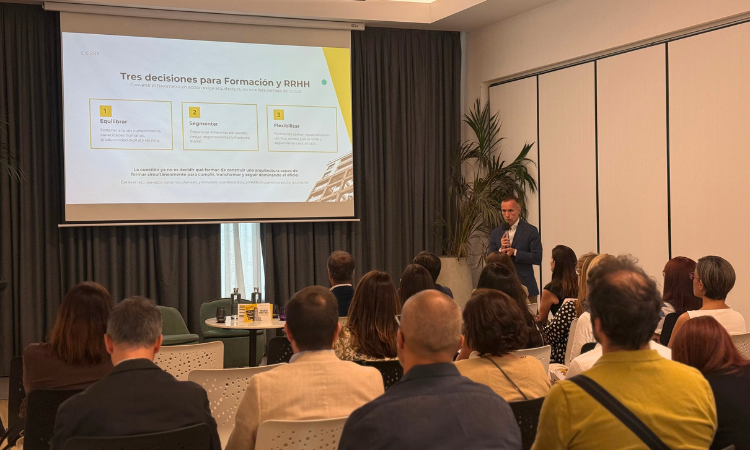
- Structuralia’s B2B division, part of the EDUCA EDTECH Group, has presented the Educa PHAROS 2026 Barometer in Madrid alongside representatives from Naturgy, Endesa, Redeia and Structuralia.
- The meeting provided an opportunity to analyse how learning needs within organisations are changing and what role training should play when the challenge is no longer about accessing more content, but rather about making better choices, personalising content and measuring its real impact.
EDUCA EDTECH Group has reached a new milestone in its commitment to tailoring knowledge to the real needs of organisations. Educa PHAROS, Structuralia’s B2B division, has presented the PHAROS Education Barometer 2026, a study analysing trends in corporate training, which was launched with the aim of providing useful insights into the skills that companies are currently seeking.
The report is based on an analysis of 64,426 enrolments, 2,860 active courses, 48 subject areas and 25 productive sectors and sub-sectors recorded between June 2024 and June 2026. Beyond the figures, the study highlights an increasingly complex reality for organisations: training can no longer be built around a few common topics for the entire workforce.
The launch also marks a significant step for Educa PHAROS in establishing itself as a technological solution geared towards the development of business talent.
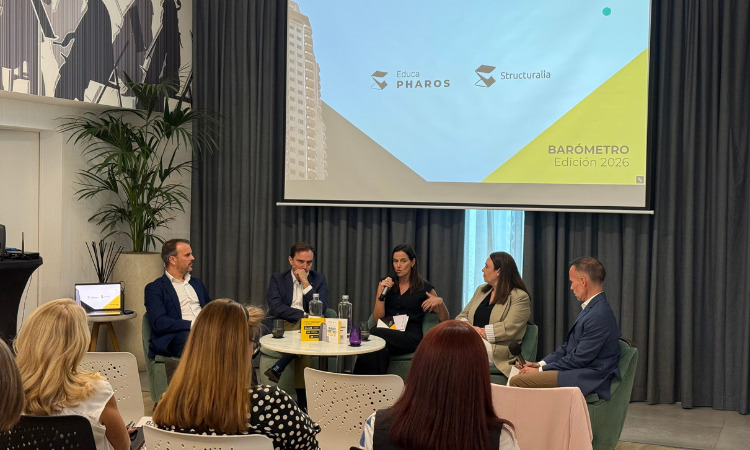
Naturgy, Endesa and Redeia face new challenges together
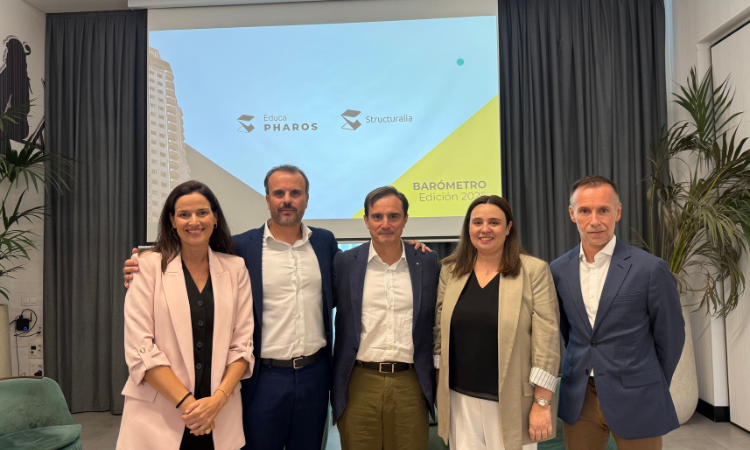
The presentation of the Barometer featured a round-table discussion moderated by Pablo Ybarra, Chief B2B Officer at EDUCA EDTECH Group, in which the following took part José Luis Ausin, Head of Corporate University at Naturgy; Mar Valiente Pérez, Head of Learning at Redeia; Simón Acosta Nieto, Head of Talent Development at Endesa; and Raquel Robles Gil, from Structuralia.
Although the speakers came from different business backgrounds, their contributions converged on several points: the need to make learning more flexible, to personalise access to knowledge, and to ensure that training is available at the exact moment when each professional needs it.
José Luis Ausin identified one of the current challenges: the “training fatigue”. Their approach involves simplifying and offering different ways of accessing the same knowledge, tailored to each person’s context and pace.
Mar Valiente emphasised that personalisation on an employee-by-employee basis is no longer enough if the learning does not take place at the right time:
"We cannot continue to focus on 40-hour courses or long-term programmes when you need that knowledge straight away".
Simón Acosta, for his part, emphasised the need to strike a balance between autonomy and support: allowing professionals to learn for themselves, whilst at the same time providing the guidelines, tools and criteria to structure that learning.
From measuring hours to measuring real impact
One of the clearest conclusions to emerge from the discussion concerned how to assess training.
"The impact of training is no longer measured in hours, but in business terms”, Pablo Ybarra summarised during the meeting.
This statement ties in directly with one of the changes highlighted by the Barometer: companies are no longer simply looking to tick boxes on a training agenda, but rather to identify which skills they need, for which roles, and what impact these will have on the organisation. The study also shows how technical training, soft skills, digitalisation, cyber security and regulatory compliance coexist.
With the launch of the 2026 Barometer, EDUCA EDTECH Group is thus reinforcing its commitment by generating our own knowledge, collaborating with leading companies and developing solutions that bridge the gap between training, technology and real business needs.